
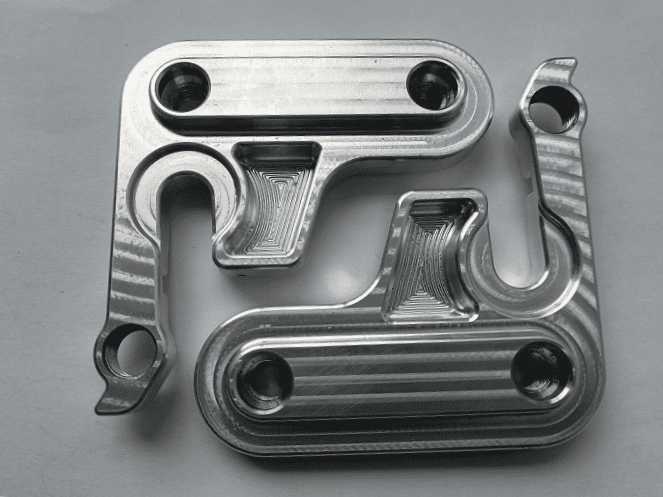
Aluminum in Manufacturing: Design, Performance, and Machining Advantages
Aluminum is one of the most widely used materials in modern manufacturing due to its unique balance of strength, weight, and corrosion resistance. It is significantly lighter than steel while still offering excellent structural performance, making it a preferred choice in industries such as aerospace, automotive, electronics, construction, and industrial equipment. The natural oxide layer that forms on aluminum also provides built-in corrosion protection, helping parts perform reliably in a wide range of environments.
Another key advantage of aluminum is its versatility. With hundreds of available alloys, manufacturers can select materials optimized for strength, machinability, heat resistance, or formability. This flexibility allows aluminum to be used for everything from lightweight brackets and housings to high-strength structural components. Its wide availability and recyclability also make it a cost-effective and environmentally friendly choice for many applications.
Common Aluminum Grades and Their Uses
Choosing the correct aluminum grade is just as important as the part design itself. Each alloy series offers different mechanical properties, corrosion resistance, and machinability, which directly affect performance and cost. Understanding these differences helps ensure the material matches the demands of the application.
One of the most commonly used alloys is 6061 aluminum, known for its excellent balance of strength, corrosion resistance, and machinability. It is widely used for structural components, frames, brackets, and enclosures. 7075 aluminum provides significantly higher strength and is often used in aerospace and high-stress applications, though it is more expensive and slightly more difficult to machine. 5052 aluminum offers superior corrosion resistance and formability, making it ideal for marine environments and sheet metal components. Other alloys, such as 2024, are valued for fatigue resistance, while 6063 is commonly used for extrusions where surface finish and appearance are important.
Designing Parts with Aluminum
Designing parts with aluminum gives engineers significant freedom compared to many other metals. Aluminum supports thin walls, complex geometries, and intricate features without excessive risk of cracking or deformation. This makes it ideal for compact, weight-sensitive designs where performance and efficiency are critical. Designers can also take advantage of aluminum’s strength-to-weight ratio to reduce material usage while maintaining durability.
Good aluminum part design also considers manufacturability from the start. Uniform wall thicknesses, generous fillets, and accessible tool paths help reduce machining time and cost while improving part consistency. Selecting the right alloy is equally important—general-purpose alloys like 6061 are well suited for most applications, while higher-strength alloys such as 7075 are better for heavily loaded components. Thoughtful design choices ensure the finished part meets performance requirements without unnecessary complexity or expense.
Machining Aluminum
Aluminum is widely regarded as one of the most machinable metals available. It cuts cleanly, allows for high spindle speeds, and produces excellent surface finishes with minimal tool wear. These characteristics enable faster cycle times and lower production costs compared to harder or denser materials. As a result, aluminum is ideal for both rapid prototyping and large-scale production runs.
In addition to machining efficiency, aluminum responds exceptionally well to secondary processes. Finishing options such as anodizing, powder coating, polishing, and bead blasting can improve corrosion resistance, wear performance, and visual appearance. This versatility allows manufacturers to meet both functional and aesthetic requirements without changing materials. Combined with its speed, precision, and finish quality, aluminum remains one of the most reliable and cost-effective materials for CNC machining.