
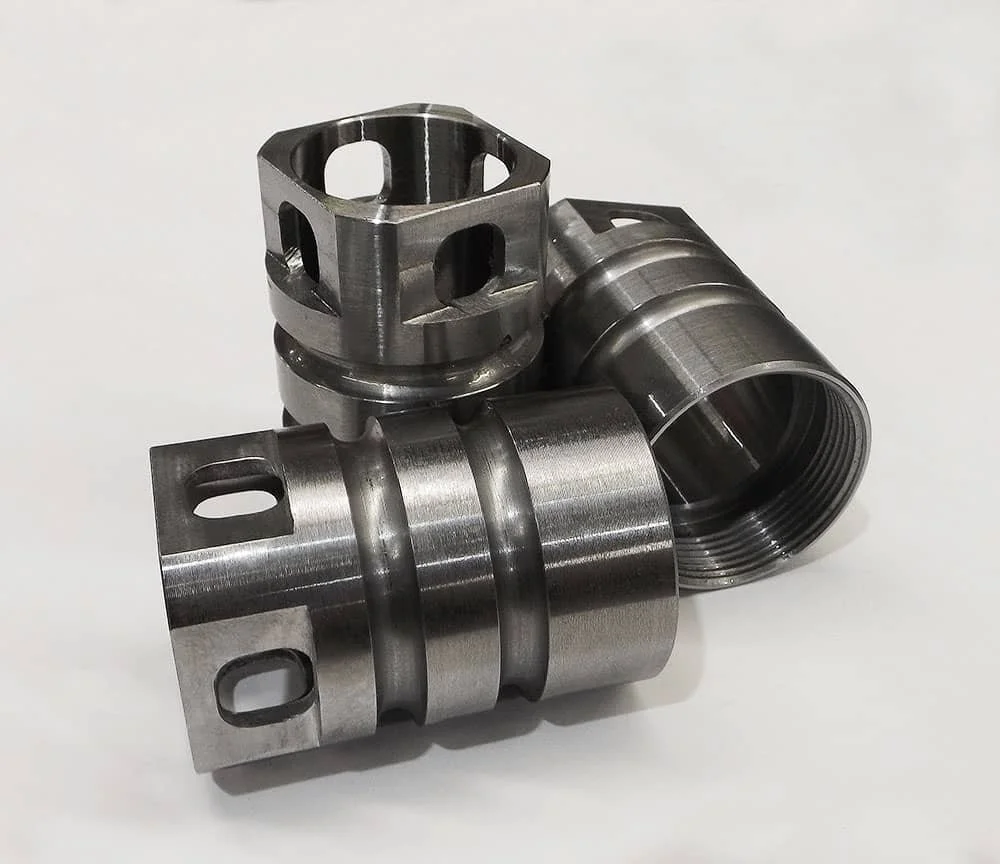
Carbon steel in Manufacturing: Design, Performance, and Machining Advantages
Carbon steel is one of the most widely used materials in industrial manufacturing due to its strength, durability, and cost-effectiveness. By varying the carbon content, manufacturers can achieve a wide range of mechanical properties, from softer, more ductile steels to extremely hard and wear-resistant grades. This versatility makes carbon steel a staple material in industries such as construction, heavy equipment, automotive, energy, and general industrial manufacturing.
Another major advantage of carbon steel is its availability and affordability. Compared to alloy or stainless steels, carbon steel offers excellent strength at a lower material cost, making it ideal for high-volume production and heavy-duty components. While it does not offer the same corrosion resistance as stainless steel, carbon steel excels in structural and load-bearing applications where strength and toughness are the primary concerns.
Common Carbon Steel Grades and Their Uses
Carbon steel is typically categorized by its carbon content—low, medium, and high carbon—each offering distinct advantages. Selecting the right grade early in the design process ensures the material delivers the proper balance of strength, machinability, and durability for the application, while avoiding unnecessary cost or processing steps.
Low-carbon steels such as 1018 and 1020 are easy to machine, weld, and form, making them ideal for brackets, frames, shafts, and general-purpose components. Medium-carbon steels like 1045 provide increased strength and wear resistance and are commonly used for gears, axles, pins, and mechanical components. High-carbon steels offer superior hardness and abrasion resistance, making them suitable for tooling and wear parts, though they are more difficult to machine and often require heat treatment to achieve optimal performance.
Designing Parts with Carbon Steel
Designing parts with carbon steel requires careful consideration of strength requirements, wear conditions, and operating environments. Carbon steel is well suited for components subjected to high loads, impact, or abrasion, such as shafts, pins, gears, and machine frames. Its predictable mechanical properties allow engineers to design parts with confidence, especially in applications where rigidity and long-term durability are critical.
From a manufacturability standpoint, designers should account for carbon steel’s hardness and potential need for secondary processes. Features such as proper fillets, realistic tolerances, and uniform cross-sections help reduce stress concentrations and improve machinability. Designers may also plan for heat treating, case hardening, or surface coatings to enhance wear resistance and corrosion protection, ensuring the part performs reliably throughout its service life.
Machining Carbon Steel
Machining carbon steel is a common and well-established CNC process, but it requires different considerations than softer materials like aluminum. Carbon steel typically machines at slower speeds and generates more heat, which can increase tool wear. Proper tooling selection, cutting parameters, and coolant use are essential to maintain accuracy, surface finish, and tool life.
Despite these challenges, carbon steel machines very consistently and holds tight tolerances well. It responds effectively to secondary processes such as heat treating, black oxide coating, plating, and surface hardening, allowing manufacturers to tailor material properties to specific applications. With the right machining expertise, carbon steel delivers robust, long-lasting components capable of performing in demanding industrial environments.