
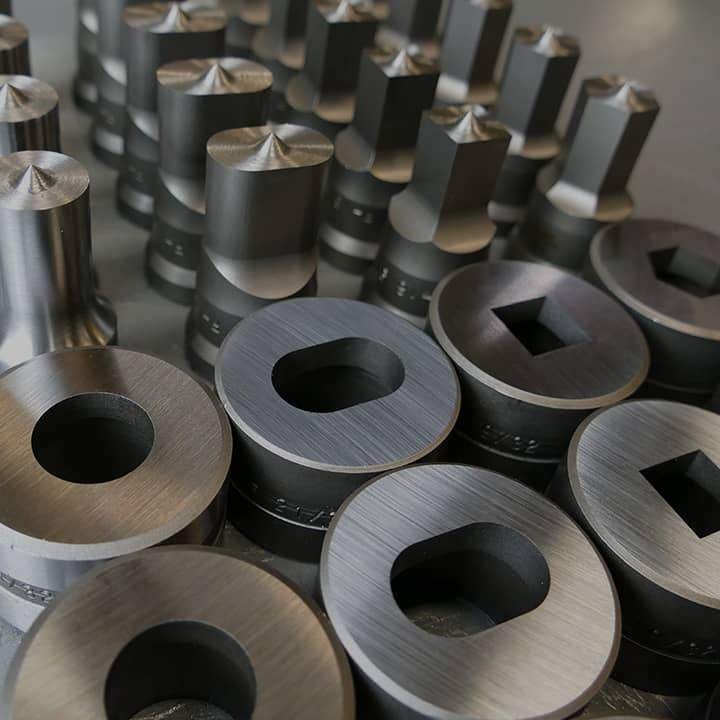
Tool steel in Manufacturing: Design, Performance, and Machining Advantages
Tool steel is a specialized class of steel designed for extreme strength, hardness, and wear resistance. It is most commonly used in applications where parts must withstand high stress, repeated impact, abrasion, or elevated temperatures. Because of these properties, tool steels are essential in industries such as manufacturing, automotive, aerospace, metal forming, and injection molding.
Unlike standard carbon steels, tool steels are engineered to maintain their mechanical properties under demanding conditions. They are frequently heat treated to achieve precise hardness levels, allowing them to perform reliably in long production runs. While tool steel is more expensive and challenging to machine than many other materials, its durability and long service life often make it the most cost-effective option for high-wear applications.
Common Tool Steel Grades and Their Uses
Tool steels are categorized by their alloy content and intended performance characteristics, such as wear resistance, toughness, or heat resistance. Choosing the correct grade is critical, as different tool steels are designed for very specific operating conditions and manufacturing processes.
A-series tool steels (air-hardening) offer excellent dimensional stability and wear resistance, making them ideal for dies, punches, and precision tooling. D-series tool steels provide extremely high wear resistance and are commonly used for cutting tools, shear blades, and forming dies. O-series tool steels (oil-hardening) are known for toughness and ease of machining, often used for short-run tooling and fixtures. H-series tool steels are designed for high-temperature applications such as hot-work dies, molds, and extrusion tooling where heat resistance is critical.
Designing Parts with Tool Steel
Designing parts with tool steel requires careful attention to stress, heat, and wear conditions. Because tool steels are typically very hard, designers must consider how the part will be loaded during use and where stress concentrations may occur. Features such as generous fillets, proper clearances, and uniform cross-sections help reduce the risk of cracking or premature failure, especially after heat treatment.
It is also important to design with the full manufacturing process in mind. Many tool steel parts are machined in a softer, annealed state and then heat treated to final hardness. Designers should account for potential distortion during heat treatment and allow for finish machining or grinding afterward. Proper planning ensures the final part meets dimensional and performance requirements without unnecessary rework.
Machining Tool Steel
Machining tool steel is more demanding than machining aluminum or mild steel due to its hardness and toughness. Cutting speeds are typically slower, tooling must be carefully selected, and proper coolant use is essential to control heat and extend tool life. Even in its annealed state, tool steel requires experienced machining practices to achieve tight tolerances and consistent results.
Despite these challenges, CNC machining allows tool steel components to be produced with exceptional accuracy. Tool steel responds well to secondary operations such as heat treating, surface grinding, polishing, and coatings, which further enhance wear resistance and surface finish. When machined and processed correctly, tool steel components deliver unmatched durability in high-wear, high-stress environments.