
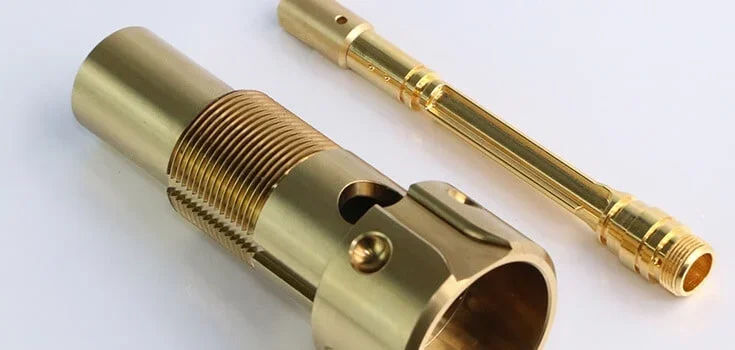
Brass in Manufacturing: Design, Performance, and Machining Advantages
Brass is a widely used non-ferrous metal known for its excellent machinability, corrosion resistance, and attractive appearance. An alloy primarily of copper and zinc, brass is commonly found in industries such as plumbing, electrical, automotive, marine, and general industrial manufacturing. Its ability to resist corrosion while maintaining strength makes it especially suitable for components exposed to moisture or mild chemicals.
Another major advantage of brass is its efficiency in manufacturing. Brass machines faster and cleaner than many other metals, producing smooth surface finishes and tight tolerances with minimal tool wear. This efficiency translates into lower machining costs and shorter lead times, making brass an excellent choice for both low- and high-volume production.
Common Brass Grades and Their Uses
Brass alloys vary based on their copper-to-zinc ratio and the addition of other elements, which affect strength, corrosion resistance, and machinability. Selecting the proper brass grade ensures the material meets both performance and production requirements.
C360 brass (free-machining brass) is the most commonly used grade in CNC machining due to its outstanding machinability and ability to hold tight tolerances. It is widely used for fittings, valves, fasteners, and precision components. C260 brass (cartridge brass) offers higher ductility and corrosion resistance, making it ideal for formed parts and decorative applications. Other specialty brasses are used where increased strength, dezincification resistance, or specific environmental performance is required.
Designing Parts with Brass
Designing parts with brass offers engineers significant flexibility thanks to the material’s stability and ease of machining. Brass performs well in precision components requiring fine details, threads, and smooth finishes. It is often selected for parts that must assemble easily, seal effectively, or provide consistent dimensional accuracy over time.
From a design-for-manufacturing standpoint, brass allows for tighter tolerances and more intricate features than many harder metals. Designers should still follow best practices such as using appropriate radii, avoiding unnecessary complexity, and accounting for the intended operating environment. Proper material selection ensures the finished part balances appearance, performance, and cost.
Machining Brass
Brass is considered one of the easiest metals to machine. It allows for high cutting speeds, produces short, manageable chips, and generates minimal heat during cutting. These characteristics reduce tool wear and enable highly efficient CNC machining with excellent surface finishes straight off the machine.
In addition to its machinability, brass responds well to secondary operations such as polishing, plating, and light finishing. These processes can enhance appearance, improve corrosion resistance, or meet aesthetic requirements without significant added cost. For precision components where efficiency, accuracy, and visual appeal matter, brass is an ideal machining material.